



- Key takeaways:
- The Key Difference: Automation vs Autonomy
- How Do Cognitive Supply Chains Work?
- What Are The Core Principles of Cognitive Supply Chains?
- Crawl, Walk, Then Run: Your Implementation Roadmap
- From Cognitive Supply Chain Vision to Production Reality
- In Summary: Cognition That Needs Orchestration
Key takeaways:
- Real-time decision-making is vital to keep supply chains running
- Autonomous systems can pick up internal and external information and signals and turn them into actionable predictions
- These predictions can then be executed by AI agents to minimize disruption and maximize efficiency
- Multi-agent orchestration is key to keeping all agents working to the same overall business objectives
As supply chains continue to evolve, it has never been more important to focus on efficiency and resilience. Advances in data, AI and connectivity are creating new opportunities for organizations to respond faster, plan more accurately and operate with greater confidence, even as conditions continue to change.
From shifts in consumer demand to wider external factors such as geopolitical events and climate related disruption, supply chains are operating in an increasingly dynamic environment. The opportunity now is not just to react more quickly, but to anticipate change and act on it in real time.
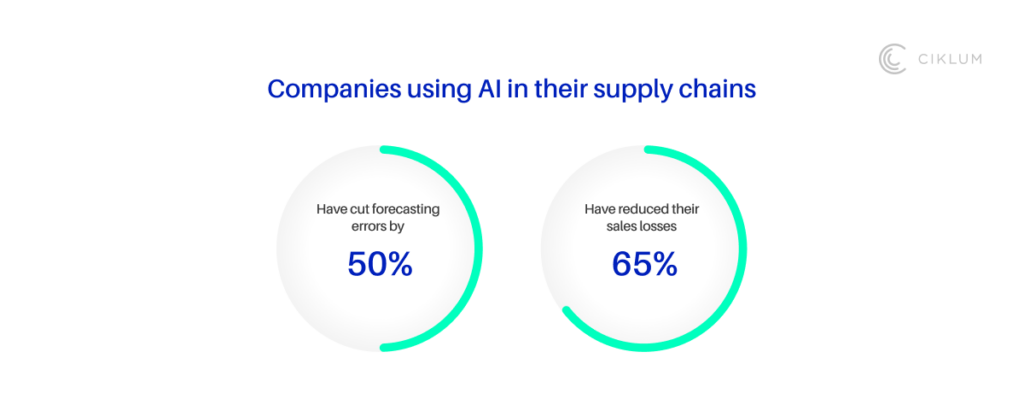
Even digitized supply chains can struggle to keep pace if data is only analyzed after the fact, whether by staff or by traditional analytical tools. But with the right intelligence in place, supply chain data can become a real-time driver of action rather than a record of what has already happened. DP World research has found that companies using AI in their supply chains have cut forecasting errors by 50% and reduced their sales losses by 65%.
This is where the cognitive supply chain comes into play. By continuously sensing signals, predicting outcomes and executing decisions through AI driven systems, organizations can move from reactive processes to proactive, adaptive operations.
In this blog, we will explore the concept of the cognitive supply chain, how it works in practice, and the steps organizations can take to begin building this capability within their own operations.
The Key Difference: Automation vs Autonomy
Many retail organizations fall into the trap of believing that because parts of their supply chain are automated, they are well-insulated from any external impacts. But that isn’t necessarily the case.
An automated system executes predefined rules. In retail, this might look like “If stock falls below a threshold, reorder.” However, when conditions change, these rules cannot adapt. An item may be reordered automatically, but if freight is disrupted, that stock cannot reach stores. The result is excess inventory, tied-up capital, and pressure on cash flow.
On the other hand, an autonomous system can continuously adapt to new data and make dynamic trade-offs to work towards wider business goals, such as minimizing costs or maximizing service levels. It doesn’t just execute tasks — it ensures that those tasks are good for the business. Coming back to our example rule, this would mean taking into account any external factors like freight disruption to adjust the “threshold” downwards, meaning that investment into new stock is delayed until it’s actually needed.
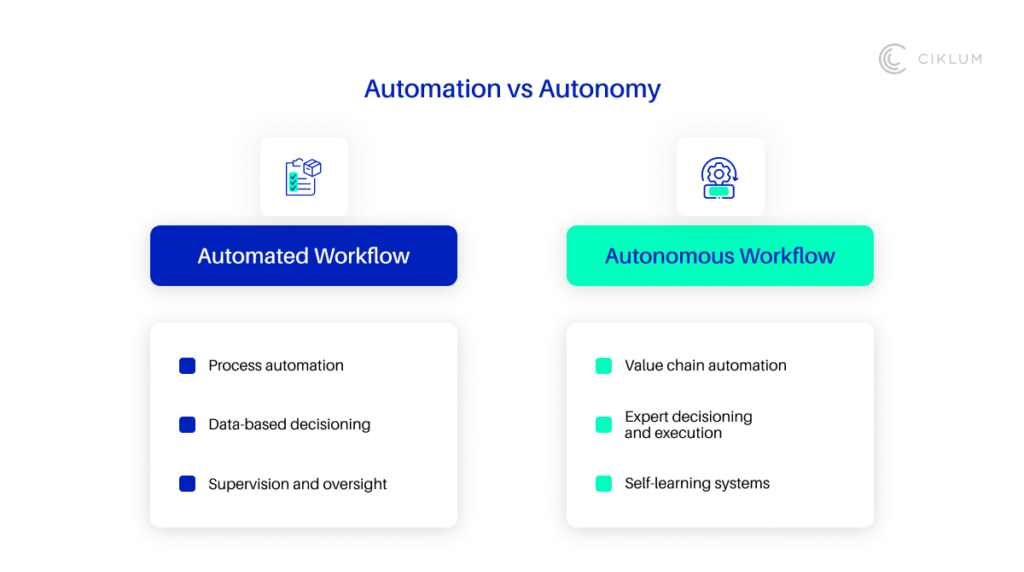
Most organizations are still working with automation rather than autonomy. According to Supply Chain Trend, only 7% of businesses have adopted autonomous end-to-end planning, and only 3% are using autonomous execution to build resilience into their supply chain. That means there is considerable first-mover advantage to be enjoyed by retail businesses that embrace autonomy now.
How Do Cognitive Supply Chains Work?
Existing supply chains tend to run on a linear path, such as “plan, source, make, deliver”, with each function operating independently of the other.
While this might make things more simple on paper, such a siloed, disconnected approach makes it harder to take a more holistic view of performance. Forecasts are separated from execution and feedback loops are relatively slow, meaning that any trade-offs that arise between different functions are generally resolved manually.
A cognitive supply chain, however, works on a continuous loop that is driven by insights rather than practical functions: “sense, predict, decide, execute, learn, sense, etc.”. This continuous loop is powered by agentic AI systems that enable decisions to be made and executed dynamically across the network.
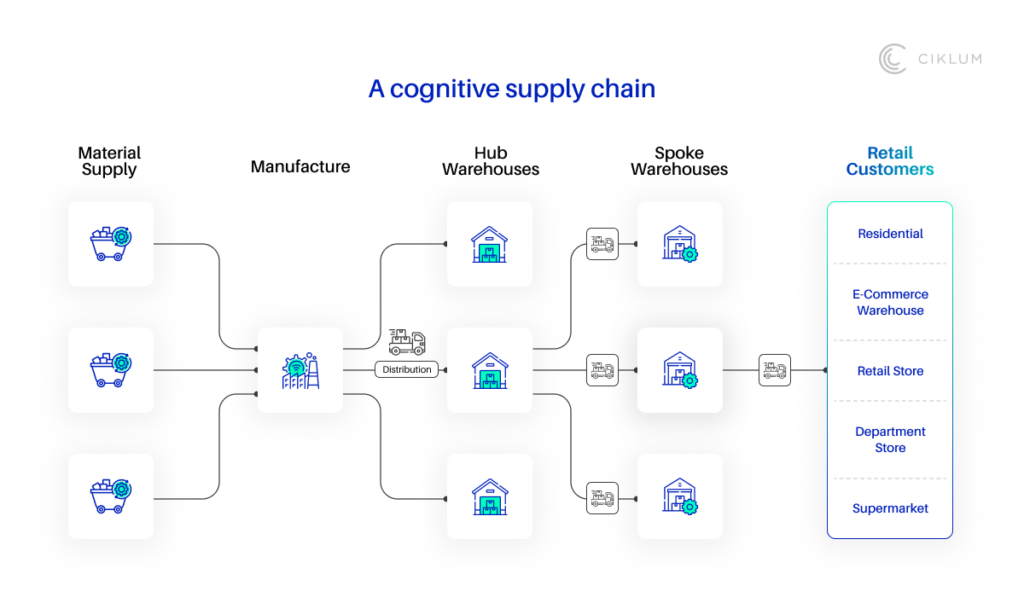
This may sound like a subtle change, but it represents a fundamental change in supply chain philosophy. Processes are no longer the center of the universe – decisions are.
What Are The Core Principles of Cognitive Supply Chains?
Behind that continuous loop are some key technological foundations that make cognitive supply chains possible:
Sensing: The ‘Always-On’ Signal Layer
The supply chain must be able to continually collect and interpret important signals, both from inside and outside the organization.
A ‘demand sensor’ agent can collect these signals, across weather forecasts, news events, social media events, changes in competitors’ pricing strategies and more. These can then be used to recalibrate forecasts at granular level — even down to individual locations and SKUs.
Having this real-time truth in place allows other autonomous agents to make their own predictions and plans effectively, with the overarching goal of predicting potential changes in consumption before they happen.
At Ciklum, we used this principle with a global consumer goods leader, delivering those signals in the form of a centralized, cloud-based data model and dashboards, powered by Snowflake and Microsoft Azure. This helped contribute to a 9% reduction in stock-outs and a forecast $5million cost reduction.
Predicting: Enabling Continuous Decision Intelligence
While sensing identifies change at the start of the cycle, and execution takes action at the end, prediction is the bridge in the middle that interprets impact.
Traditional forecasting that is periodic, singularly focused in output and based largely on historical data is no longer fit for purpose. Instead, predictions should be continuous and real-time, translating all the signals received into continuous, decision-ready intelligence that enables real-time action.
The signals ingested from the sensing layer are then fed through AI and machine learning models to identify patterns and correlations, and will constantly recalculate demand expectations, supply constraints and risk scenarios.
As a result, these cognitive predictions will continually update themselves as new internal and external signals arrive, and will deliver multiple probable outcomes rather than a single fixed forecast. The output for stakeholders is an evaluation of what is most likely to happen, what could happen under different conditions, and what actions should be taken under each scenario.
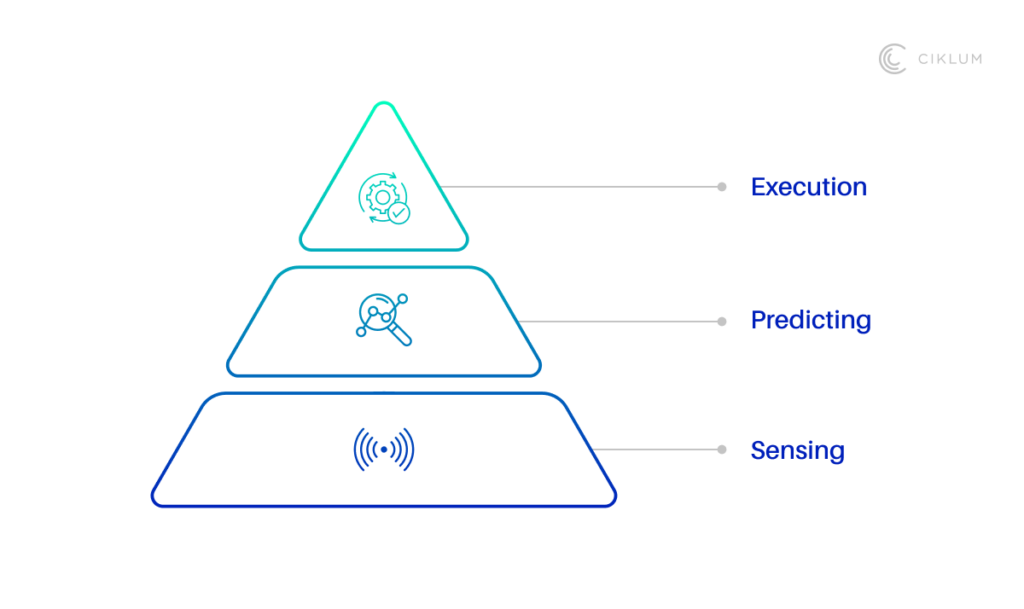
Execution: Taking Action Through Agentic Systems
Turning insights into successful action is where many supply chains struggle, especially when that execution is manual, delayed or siloed. But when execution is handled by specialized AI agents operating across the network, these agentic systems become the mechanism through which the cognitive supply chain operates in practice, breaking down the barriers to an integrated approach.
Typical AI agents used for execution include:
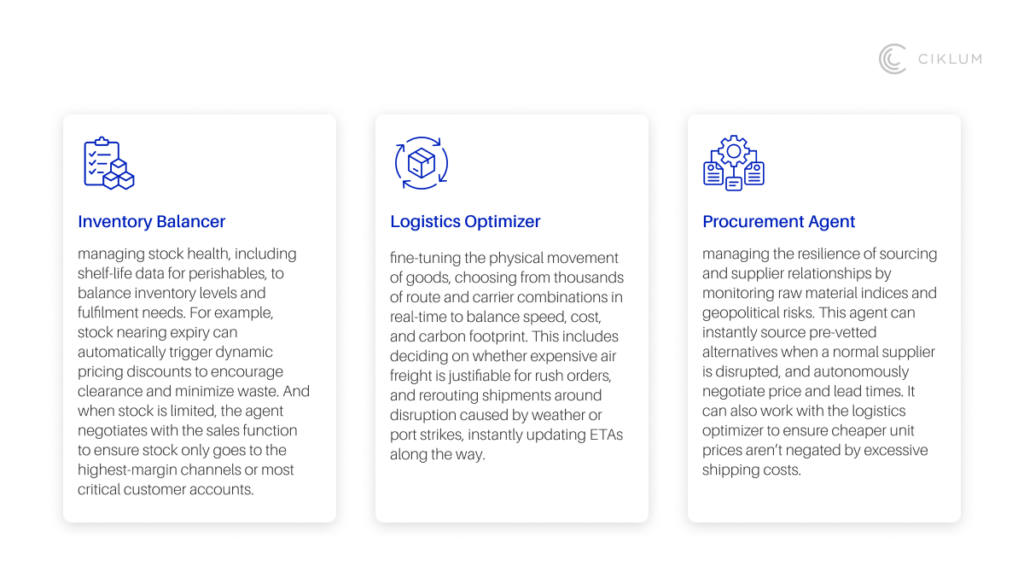
At Ciklum, we have implemented these types of supply chain agents for a global automotive manufacturer, as part of a wider AI implementation that has saved them over $100million. AI-powered agents have helped reduce the manual workloads involved in their supply chain, and accelerate response times.
Crawl, Walk, Then Run: Your Implementation Roadmap
Moving towards a cognitive, agent-driven supply chain is a major shift, one that means moving away from a tried-and-tested approach that may have served your organization well for many years.
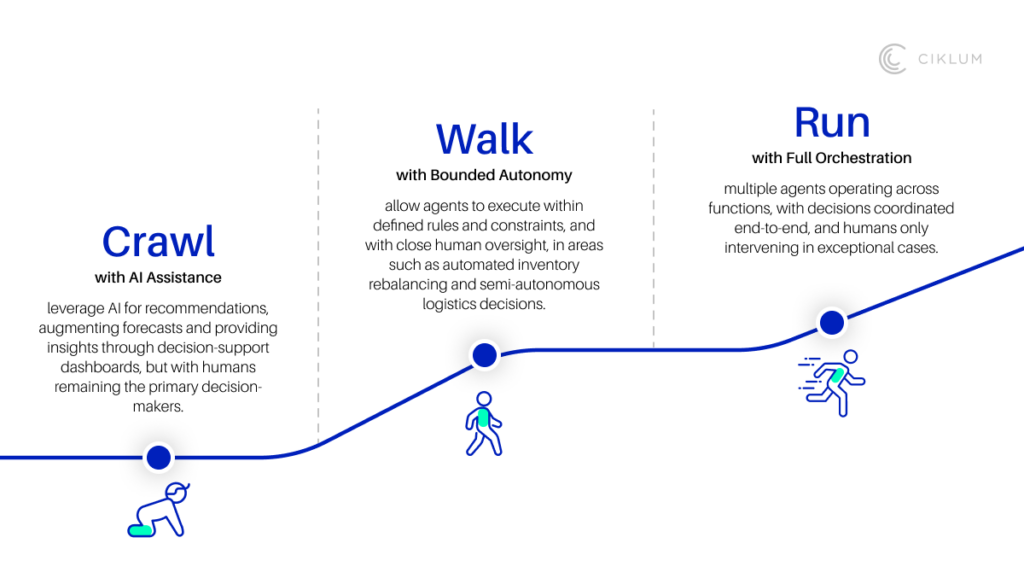
For that reason, it should be considered as a gradual progression towards full autonomy, rather than as a single ‘big bang’ transformation. From our experience helping countless businesses on this journey, we advocate a controlled, incremental three-step approach that will allow you to evolve towards autonomy:
From Cognitive Supply Chain Vision to Production Reality
For many organizations, the challenge is not understanding the value of a cognitive supply chain. It is knowing how to implement it in a way that is fast, governed and scalable - without creating fragmented solutions, increasing operational risk or adding further complexity to an already interconnected system.
This is where a structured delivery approach becomes critical.
At Ciklum, we use PRODIGY, our AI delivery methodology, to help organizations move from early-stage experimentation to production-ready, autonomous systems. Rather than treating AI as a series of isolated use cases, PRODIGY provides a consistent framework for designing, building and scaling AI capabilities across the supply chain.
In practice, this means combining accelerated engineering with reusable delivery patterns and enterprise-grade governance. Teams can validate high-value use cases early, integrate them into real operational workflows, and scale them with the right controls in place — from data quality and model performance to decision accountability and system interoperability.
This approach also ensures that individual agents do not operate in isolation. Instead, they are designed as part of a coordinated system, aligned to shared business objectives and connected through an orchestration layer that enables real-time decision-making across functions.
The result is a more structured path to autonomy: one where organizations can reduce implementation risk, shorten time-to-value, and build the foundations for multi-agent orchestration that can scale confidently across the supply chain.
In Summary: Cognition That Needs Orchestration
With such a change in philosophy and so many agents involved in making cognitive supply chains work, multi-agent orchestration (MAO) is a must to ensure that supply chains become dynamic, competitive assets.
The right support and solutions for MAO can allow your agents to:
 Reduce decision latency from days to minutes by automatically detecting disruptions in real-time and solving problems before your team even finds out that there’s an issue
 Negotiate in the context of your whole business, taking into account inventory, logistics and transportation costs in real time
 Manage complexity and efficiency at a granular level to cut costs, reduce waste, and free up human endeavor to focus on strategic work elsewhere
As these capabilities continue to evolve, the role of human intervention will increasingly shift. Gartner predicts that by 2031, around 60% of supply chain disruptions will be resolved without human intervention, underlining the growing importance of agent-driven, orchestrated systems.
For organizations looking to stay ahead of this shift, the focus now must be on building the right foundations for orchestration and scalable autonomy.
To find out more on making your supply chain cognitive, and putting the right orchestration layer in place to maximize its potential, talk to the Ciklum team today.

By Sreekumar Veluthakkal

Director - Retail and Consumer Goods
Sreekumar Veluthakkal is a Consulting Director for Retail and Consumer Goods at Ciklum, where he helps global retailers and consumer brands rethink how they operate and compete through AI, digital innovation, and intelligent retail systems.