



By Sarah Topping, Ciklum & Jerry Haywood, boost.ai
In partnership: Ciklum × boost.ai
Key Takeaways
- Banking customers prefer voice contact — but this can be expensive to deliver with a human team
- A maturing tech stack means AI voice contact centers for BFSI firms are now practical
- Well-orchestrated LLMs and natural language understanding supports a wide range of use cases at scale
- Risk, governance and compliance can all be factored into implementation from the outset
Voice has never gone away in banking and financial services (BFSI) — but the economics behind it are increasingly unsustainable. While digital channels have scaled, complex, high-value interactions still default to voice, where cost-to-serve is highest and experience is most inconsistent.
This creates a structural challenge: organizations cannot remove voice, but they cannot scale it efficiently using traditional models.
This is reinforced by changing customer expectations. Research shows that even digitally native customers including Gen Z increasingly expect natural, real-time voice interactions when resolving complex issues, rather than navigating fragmented digital journeys. In fact, 71%, highlighted that voice remains a critical channel even for the most digitally fluent users.
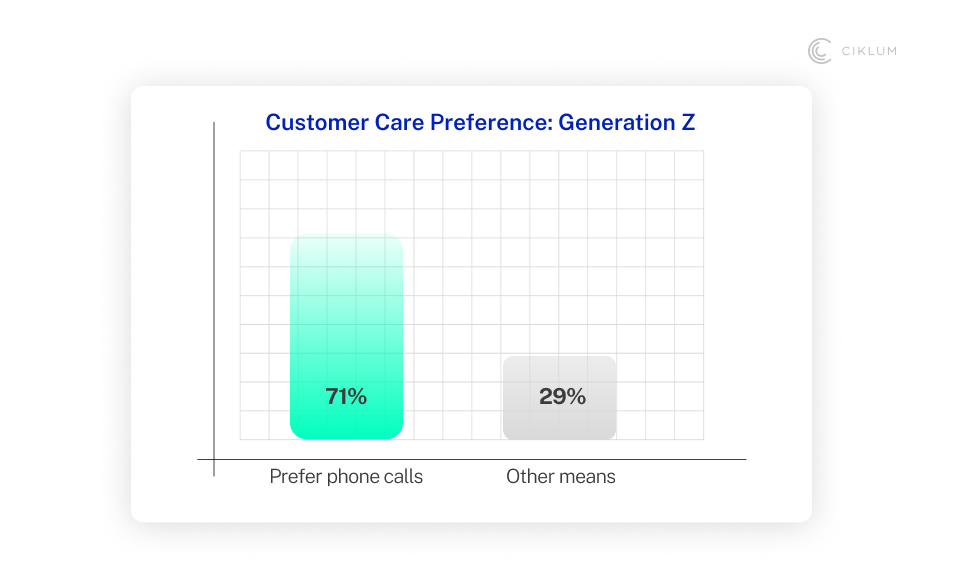
Of course, in practice, hiring enough customer service agents to field all customer service calls quickly and effectively can be financially prohibitive for many businesses. And this is where AI-based voice technology can deliver the best of both worlds: personalized contact for customers, and cost-effective customer service operations for the business.
In this blog, we’ll explore how AI voice can transform BFSI contact centers, including the key use cases it can be applied to, and why it’s important to consider risk and governance from the outset.

How BFSI Contact Centers Are Evolving
Traditional contact center models force a trade-off between cost and experience. Human-led voice delivers quality but does not scale efficiently, while IVR and legacy automation reduce cost but degrade experience.
Agentic voice changes this dynamic by introducing goal-driven AI that can manage conversations, access systems, and execute actions, enabling organizations to handle high-volume, operational queries without compromising customer experience.
This has led many BFSI firms — in line with other sectors like retail and travel — to embrace the possibilities of generative AI to take care of customer service queries at much greater scale and much lower cost. Gartner estimates that as many as 80% of customer service and support organizations are now using generative AI, either to boost customer experience or aid agent productivity.
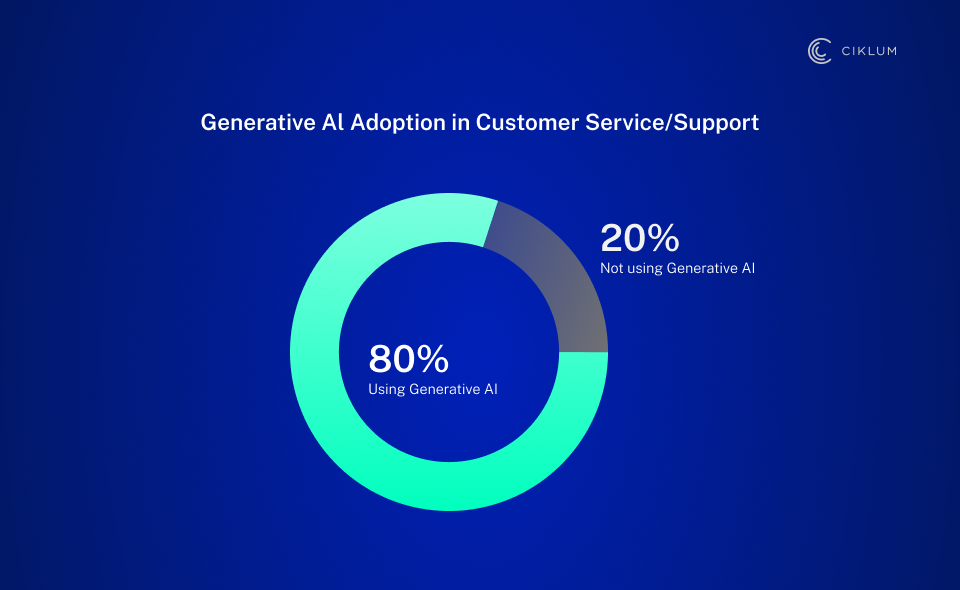
This has come at the cost of voice-based interactions between customers and service agents, leading to frustration among customers who feel unable to communicate with a business verbally. AI has not been able to help solve this problem, as voice-based AI wasn’t mature or reliable enough to support BFSI firms at scale… until now.
Jerry Haywood, CEO of boost.ai — specialists in conversational AI voice built specifically for regulated financial services — has seen this tension play out across the sector firsthand:
"Legacy IVRs were built for containment, not resolution - and customers feel that friction every time they call. In banking, voice is where the highest-stakes conversations happen, but scaling it has always meant a trade-off between service and cost. That's changing. We're moving beyond rigid menus to boost.ai agents that understand intent and take action - from fraud alerts to complex servicing. The result is high-touch service at a scale that's finally sustainable - and a reset for what great voice experiences should feel like."
For Haywood, this is not incremental improvement — it is a fundamental reset of what the contact center is for.
Meet the Agentic Voice Contact Center
An agentic voice contact center goes beyond conversational AI. It does not simply respond — it acts. It combines real-time speech recognition, large language models, and orchestration frameworks to:
- Understand customer intent in context
- Determine the appropriate action or workflow
- Execute tasks across backend systems
- Apply guardrails, compliance rules, and escalation logic
This transforms voice from a reactive channel into an execution layer for customer operations.
How AI Voice is Transforming BFSI Customer Service Already
Agentic voice-based contact centers represent a major redefinition of how the contact center works within a business. No longer is it a human-led enterprise, supported by a simple voicebot: instead, the contact center is an integrated ecosystem of goal‑directed AI agents orchestrated alongside humans.
BFSI first movers have already begun to feel the benefit of AI voice agents handling a range of service queries, including:
 Everyday Servicing
Helping customers with simple requests like balance enquiries and card management, and resolving disputes
 Risk and Fraud
Minimizing the chances of fraudulent account use and data access, through alerts, authentication and blocking
 Lending and Mortgages
Key functions of finance-related activities, including loan status, document flows, and organizing debt restructuring
 Insurance
Processing claims and collections, as well as policy renewals
 Wealth Management
Initial triage of financial advice requests that support more focused assistance from staff
The common thread that links all these use cases together is that they are all low or medium complexity, and high in volume. This means that the gains, not only in service but also in efficiency and productivity, can drive considerable return on investment.
The key is not complexity alone — but control. Agentic voice performs best where workflows are well-defined, decisions are auditable, and outcomes can be governed.
Recommended Read: AI Automation in BFS: Strengthening Compliance, Fraud Prevention, and CX
Making It Work Amid Stringent Regulations
As BFSI is one of the most heavily-regulated of all business sectors, ensuring that AI works reliably, responsibly and safely has to be a top priority.
Even though the technology behind agentic AI has come on leaps and bounds in recent years, there are still a number of potential issues to address, such as:
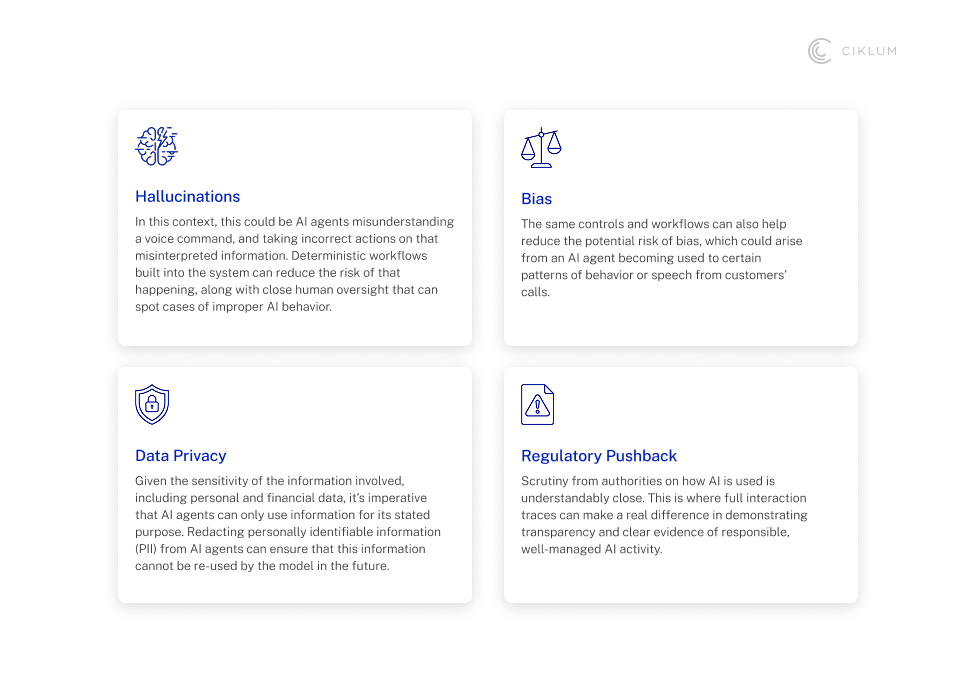
The Architecture That Makes It Compliant. The boost.ai vision.
For BFSI organisations, navigating these risks requires a Hybrid AI architecture — and it is precisely here that boost.ai's approach differs from generic conversational AI platforms.
Rather than relying solely on the black-box nature of LLMs, boost.ai's platform combines large language models with Natural Language Understanding (NLU) to balance conversational fluidity with deterministic logic. This architecture was designed from the ground up for regulated industries — where a misunderstood instruction or an uncontrolled output is not just a bad experience, but a compliance event.
In practice, this means high-stakes actions — like transaction processing, identity verification, or fraud flagging — are tethered to rule-based flows that cannot be overridden by the model. LLMs handle what they do best: interpreting the full variability of how customers describe their needs and responding in natural language. The deterministic layer handles what regulated environments demand: predictable, auditable, bounded outcomes.
Input and output guardrails, combined with PII masking applied at the infrastructure level, ensure the AI agent never operates outside approved compliance boundaries — not as a policy aspiration, but as an architectural guarantee.
This is what separates a voice AI deployment that satisfies a BFSI compliance team from one that doesn't make it past legal review.
In Summary: A True Driver of CX Success
Agentic AI voice represents a fundamental shift in how contact centers operate — moving from conversation handling to outcome execution.For BFSI organizations, this is not just an efficiency play. It is an opportunity to redesign customer operations around speed, accuracy, and scalability, while maintaining the governance required in regulated environments. The organizations that succeed will not be those that simply deploy AI voice, but those that embed it into well-defined workflows, architecture, and operating models.
Now is the time to start on your journey towards an AI voice-based contact center, if your organization hasn’t done so already. Together, Ciklum and Boost.ai bring the capabilities needed to turn this vision into a live, compliant solution — combining Ciklum’s BFSI-grade engineering and orchestration expertise with Boost.ai’s conversational AI voice interaction engine to deliver secure, scalable AI voice contact centers.
To find out more about the technical steps on the road to a live, compliant voice contact center — one that works for your customers, and your business — take a look at this guide on contact center execution for BFSI leaders.

By Sarah Topping

Principal Lead - Intelligent Automation & Conversational AI
Sarah leads Conversational AI at Ciklum, spearheading AI-powered transformations in retail, publishing, and automotive. With a decade of experience, she develops award-winning virtual assistants and champions Responsible AI to enhance user experiences and operational efficiency.
Blogs
Discover Similar Insights

Agentic AI in Retail: Closing the Gap Between Customer Intent and Enterprise Systems
Learn More
Enterprise AI Automation: A Practical Guide to GenAI, AI Agents and Intelligent Workflows
Learn More
Connecting AI to Your Business: A Complete Guide to MCP Servers
Learn More
From Copilot to Operating Model: What Agentic AI Changes in 2026
Learn More