


- Key takeaways
- Why Dashboards Don’t Lead to Faster Decisions
- How Agentic AI Changes the Economics of Investigation
- From Payment Data to a Business Decision
- Why the Underlying Data Architecture Matters
- Why Human Judgement and Governance Still Come First
- Start With the Data Question You’ve Been Putting Off
Key takeaways
- Decision velocity is the real metric: Dashboards make data visible, but competitive advantage comes from how quickly you turn a live signal into an informed action.
- Agentic workflows change the economics of analysis: By pairing LLMs with real-time analytical engines via SQL and MCP, teams can pursue the long tail of complex business questions that were previously too slow or costly to answer.
- Architecture matters under pressure: Traditional batch warehouses struggle with the high-concurrency, unpredictable follow-up queries that AI agents generate. Fresh ingestion and sub-second query execution are essential.
- Human judgement and governance remain non-negotiable: Agents must produce auditable evidence, operate within clear access boundaries, and hand off high-consequence decisions to a named owner who holds off-system commercial context.
- Start small and specific: Pick one high-value business question you have been putting off, validate the underlying data, and design the execution path before scaling.
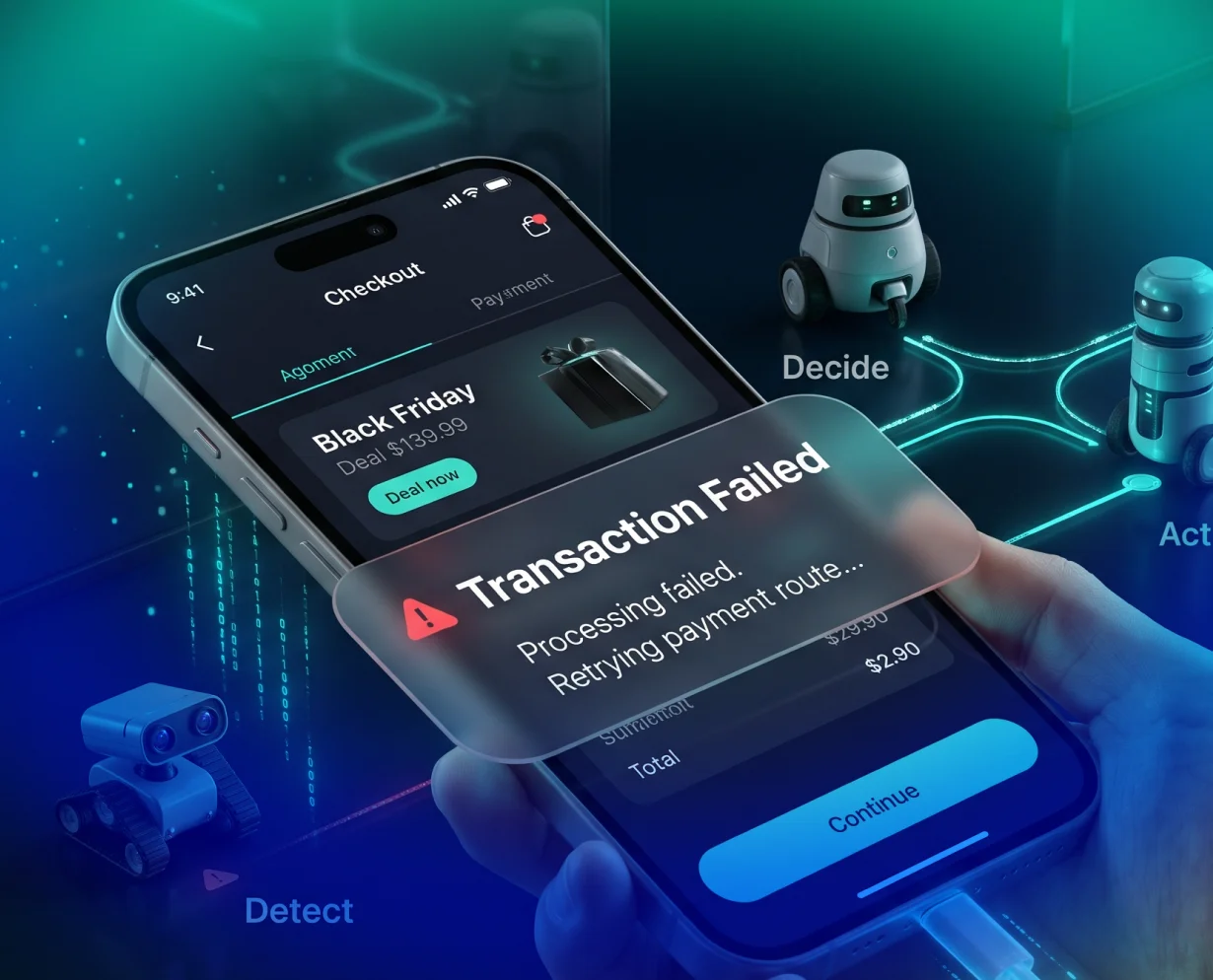
Peak trading periods such as Black Friday put a retailer’s checkout under relentless pressure. A customer can find the right product, reach the payment screen, and still abandon their basket because a transaction will not go through.
For the business, every minute spent diagnosing the root cause puts more revenue at risk. In Nuvei’s 2026 retail payments report, 89% of the 150 enterprise retail leaders surveyed said their payment infrastructure fell short during the previous holiday season.
Imagine a payment gateway starts failing mid-morning on Black Friday. Your monitoring shows a drop in completed transactions, but that alert alone is not enough to act on. You need to know what is failing and which customers are affected. Routing traffic to a secondary provider might rescue those baskets, but that provider charges higher processing fees. Before anyone flips the switch, someone has to quantify the revenue at risk, check the backup provider’s capacity, and calculate the margin impact.
How long would that take in your organisation? Minutes, hours, or half a day?
That question was the focus of my joint session with ClickHouse at the Ciklum Client Conference, From Dashboards to Decisions. High-stakes moments like Black Friday expose a structural weakness in most modern data stacks: we have spent a decade making data visible, yet decision velocity -the speed from a useful signal to an informed action -is still painfully slow.
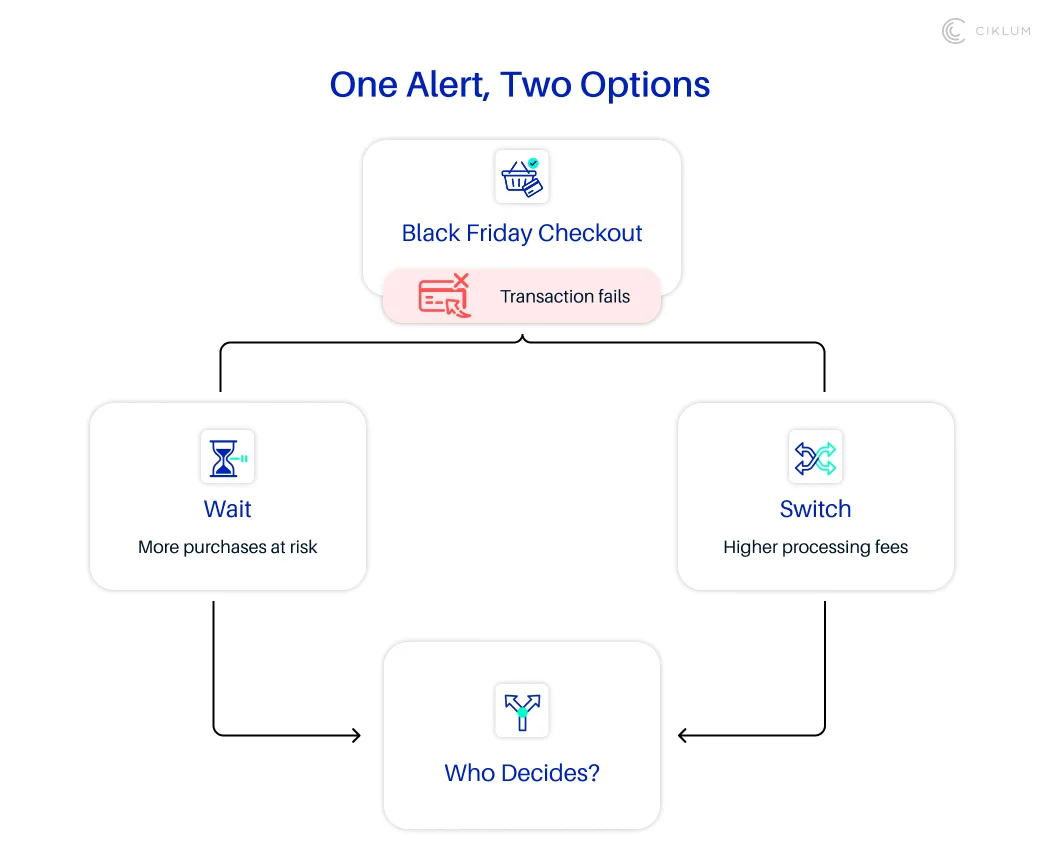
Figure 1: High-stakes incidents force a trade-off between losing revenue while waiting and absorbing higher costs to switch.
Why Dashboards Don’t Lead to Faster Decisions
Dashboards made data visible, but they were never designed to make decisions faster. A prepared dashboard is built on pre-aggregated views designed to answer yesterday’s anticipated questions, often fed by batch pipelines running on an hourly or overnight schedule.
Human problem-solving does not work that way. When you spot an anomaly, you immediately want to slice it by geography, device type, or payment method, then test what would happen if you intervened. Every answer triggers a follow-up question. Because the required join or granularity rarely exists in a fixed BI report, the investigation stalls -turning into a ticket for the data engineering team, a queue of hand-offs, and a meeting to interpret the findings.
Decision value decays while a signal waits. Across almost every enterprise I work with, decisions get delayed for the same three reasons:
- Waiting: Someone has to locate, join, and interpret the relevant tables before an answer even exists.
- Stale: A fixed dashboard answers an earlier question while the live operational picture has already shifted.
- Stuck: Even when the insight arrives, it lacks a named owner, pre-agreed approval authority, and a technical route to execute the change.
Monitoring performance with dashboards still has its place. But closing the gap between signal and action requires moving from static reporting to live, interactive investigation.
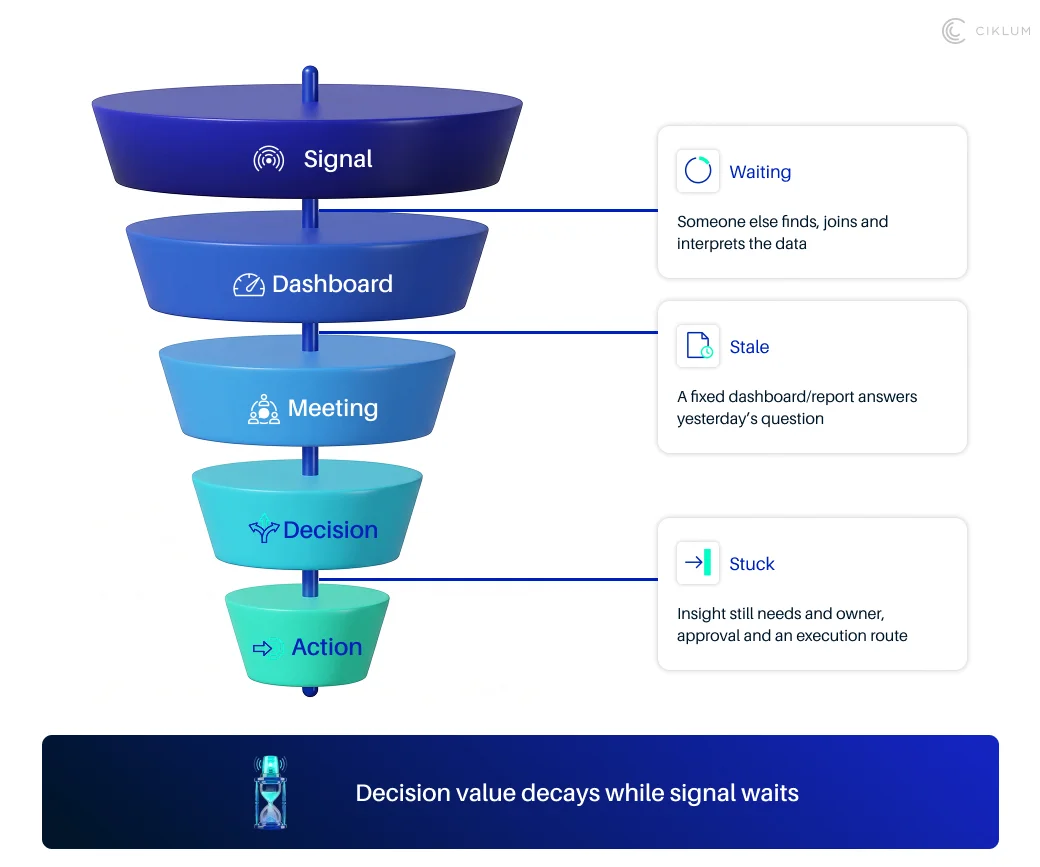
Figure 2: Where decision velocity breaks down between an operational signal and real-world action.
How Agentic AI Changes the Economics of Investigation
What makes this shift practical today is the convergence of four capabilities: connected data, real-time analytics, business AI, and agentic AI.
Asking Follow-Up Questions in Business Language
Suppose a regional dashboard flags an unexpected sales surge. Previously, finding out why meant raising a request with an analyst.
When an LLM is connected to your live analytical database -querying via SQL or the Model Context Protocol (MCP) against governed business definitions -you can interrogate the data in plain language. Is one store driving the spike, or is growth broad-based across the region?
An agentic workflow takes this a step further. Rather than stopping at a single query, the agent can run a structured, multi-step investigation: segmenting the spike by SKU and channel, checking promotional calendars and inventory tables, and testing whether you are looking at a one-off bulk corporate order or sustained consumer demand. Instead of handing you a static chart, it surfaces a grounded hypothesis you can immediately verify.
Unlocking the Long Tail of Unasked Questions
I saw the commercial impact of removing this friction firsthand with a former client, the CEO of a commercial insurance business. He wanted to model what a severe earthquake in California would mean for his portfolio, and then iteratively test how shifting risk distribution would alter the company’s exposure. Under their traditional setup, every “what if” adjustment triggered another multi-day cycle with the analytics team.
We introduced conversational analytics so he could run those scenario tests directly. On a separate fire-risk investigation, we enabled ad-hoc geospatial joins combining insured property locations with nearby fire hydrant data -work that would previously have sat in a data engineering backlog for weeks.
As a data leader, what excites me most is not just speeding up existing reports, but unlocking the long tail of questions that never get asked. When an exploratory analysis takes weeks of specialist effort and the commercial payoff is uncertain, teams rationally deprioritise it. Bringing the cost and latency of investigation down to minutes makes those questions worth pursuing.
From Payment Data to a Business Decision
An insurance CEO modelling catastrophe risk has time to iterate. During a Black Friday checkout failure, you do not. Every minute of latency translates directly into lost conversion.
Resolving a live payment incident requires four teams to answer different questions from the exact same shared evidence:
- Technology (Service health): Where exactly is the payment failing, and is service behaviour contributing?
- Marketing (Customer impact): Which customer segments are dropping out of checkout, and what is the conversion hit?
- Finance (Commercial exposure): How much revenue is at risk per minute if we wait, and what will the higher processing fees cost if we switch?
- Operations & Data (Capacity and evidence quality): Can the backup provider handle the peak traffic -and can we actually trust the numbers we are looking at?
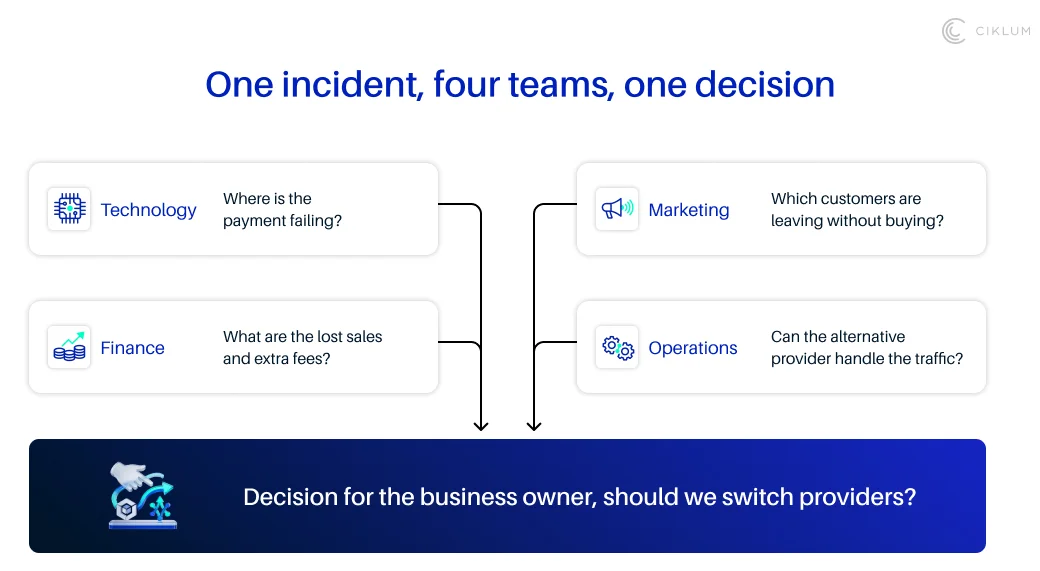
Figure 3: Cross-functional teams require different lenses on the same live incident data to support a single owner’s decision.
Why the Underlying Data Architecture Matters
This is where many AI initiatives hit a wall. Agentic workflows fundamentally change your database workload. Instead of a handful of predictable morning dashboard refreshes, agents fire off bursts of ad-hoc, multi-step follow-up queries -often in parallel. If those agents are pointing at a slow, batch-updated warehouse, you simply automate waiting.
In our joint presentation at the Ciklum Client Conference, we demonstrated how to solve this end to end. ClickHouse runs the analytical foundation; Ciklum builds the path to action.
Technically, ClickHouse fits this agentic workload for four reasons:
- Continuous ingestion (via ClickPipes): Ensures agents are reasoning over live operational events rather than stale overnight extracts.
- Columnar processing and materialised views: Delivers sub-second query responses across massive event volumes.
- Dedicated compute over shared data: Prevents concurrent human and AI queries from contending with each other during peak incidents.
- Native SQL and MCP support: Connects the analytical engine directly to AI agents and operational applications.
On top of that engine, Ciklum handles the integration, data validation, and operational plumbing -connecting the insights to the approval workflows and systems teams use to actually execute a failover. With shared evidence, focused investigation, and pre-agreed ownership in place, a business owner can move from alert to an informed switchover decision in minutes rather than half a day.
Figure 4: Combining a real-time analytical engine (ClickHouse), operational integration (Ciklum), and clear business ownership.
Why Human Judgement and Governance Still Come First
Speed without trust is dangerous. In any data-driven incident response, two realities keep humans firmly in the loop.
1. Evidence Quality and Off-System Context
First, a decision-maker must be able to verify the agent’s work. A black-box summary is not good enough for a consequential call -the system should expose the underlying SQL, data freshness, and assumptions so teams can confirm the finding is backed by solid data.
Second, even the best real-time database rarely holds the full commercial picture. Imagine your commercial team is halfway through renegotiating terms with that secondary payment provider, and a commission increase is on the table. Those discussions live in emails and boardrooms, not in your payment gateway logs. An agent calculating switchover costs from recorded historical fees would miss that context entirely.
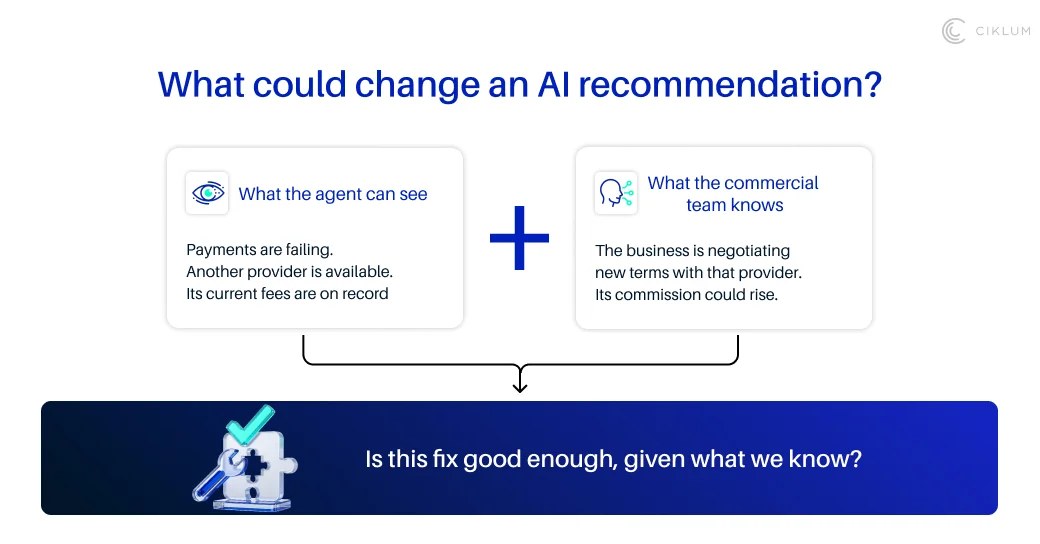
Figure 5: Agents excel at live telemetry, but human decision-makers supply the off-system commercial context.
For consequential calls, the human decision-maker remains essential: to interrogate the recommendation, apply off-system context, assess commercial risk, and own the outcome end to end.
2. Establish Authority Before the Incident Hits
Whether an AI agent can trigger an action is an engineering question. Whether it should is a risk-appetite question. In Deloitte’s October 2026 enterprise AI survey, 23% of surveyed companies reported that accountability was unclear when an AI system produced a negative outcome.
Practical data governance for agentic AI does not start with a 100-page policy document. It starts with settling three operational boundaries before a crisis hits:
- Access control: Which datasets and tables is the agent permitted to query (enforced via role-based access controls)?
- Action boundaries: Where do we draw the line between read-only investigation, automated recommendations, and write/execution permissions?
- Approval thresholds: Who holds sign-off authority, and at what commercial threshold is human-in-the-loop approval mandatory?
Settle those rules on a quiet Tuesday, and nobody is scrambling to figure out who can approve a switchover on Black Friday.
Start With the Data Question You’ve Been Putting Off
You do not need a multi-year platform overhaul to improve decision velocity. Start with one high-value business question that has been bugging you for months -the one you have avoided sending to your data team because you expect a week of back-and-forth or a polite explanation of why it cannot be done.
Map out the decision that answer would change, the person accountable for making it, and the exact execution route once they decide. Then audit the foundation: is the required data available, fresh, and consistent across systems? Our AI data readiness checklist offers a practical set of questions to run through with your team.
At Ciklum, we help organisations connect and validate that data, build governed agentic workflows on real-time analytical foundations, and wire them directly into the tools where teams approve and execute action -testing accuracy, latency, and cost at every step.
Black Friday makes the cost of slow decisions impossible to ignore. Where else in your business is a critical decision sitting in a queue, waiting for an answer?
Ready to accelerate decision velocity?
Talk to the Ciklum Data & AI team about one decision you want to accelerate -and what it will take to move from signal to action in minutes.

By Sunil Patil

Global Head of Data & AI, Ciklum
Sunil Patil is Global Head of Data & AI at Ciklum. Based in London, he sets the strategy for the global practice and oversees its growth in markets including North America and India. He works with clients and engineering teams to deliver data and AI projects and measure their business impact.
Blogs
Discover Similar Insights

Why Digital Transformation in Payments Keeps Falling Short
Learn More
Retail Tech and Profit Margins: What’s Draining Revenue and How to Turn It Around
Learn More
Why Your Product Releases Keep Slipping (and How to Fix It for Good)
Learn More
Scalability Starts Here: Architecture Decisions That Make or Break Your Product
Learn More