
- The Problem Is No Longer Knowing What Needs To Change
- Why Transformation Programmes Lose Momentum
- The Execution Gap Has Real Commercial Consequences
- What Execution-Led Transformation Should Look Like
- From Modernisation Plans To Measurable Results
- How Ciklum Helps Close The Execution Gap
- The Next Competitive Advantage Is Execution
The Transformation Execution Gap: Why ambitious modernisation programmes struggle to deliver lasting business value.
- Most retailers still deliver “multi-channel,” not omnichannel. The shopper is recognized, but not remembered
- Agentic AI is not a better chatbot. It is an orchestration layer that can understand intent and take actions across enterprise systems
- If AI is not connected to CRM, inventory, pricing, and fulfilment, it will overpromise and break trust
- The fastest path to production value is typically two parallel tracks: inventory intelligence and loyalty intelligence
- The winners in 2026 will treat AI as an engineered capability, not a series of disconnected pilots
Payments institutions are not short of transformation strategies.
ISO 20022, cloud modernisation, instant payments, AI, Open Finance and intelligent automation are already shaping investment priorities across banks, payment schemes, payment service providers (PSPs) and market infrastructures.
Most institutions understand where the industry is heading. Many have committed significant resources to getting there.
Yet knowing the destination and delivering the transformation are two very different challenges.
In October 2025, the Financial Stability Board's progress report on the G20 Roadmap for Cross-border Payments revealed a telling disconnect. Despite substantial progress in completing international policy initiatives, improvements for end users remained limited at the global level. The report warned that satisfactory progress towards the 2027 targets was unlikely on the current trajectory.
By March 2026, the FSB had launched a new implementation phase, calling for practical action plans and stronger collaboration between public authorities and the payments industry.
The message is clear: setting the direction is not the same as delivering the outcome.
That is the transformation execution gap.
And for payment institutions, closing it may prove more valuable than launching another ambitious modernisation programme.
The Problem Is No Longer Knowing What Needs To Change
The industry's willingness to modernise is not in question.
Finastra's 2026 Financial Services State of the Nation Survey, based on responses from 1,509 financial services executives and managers across 11 markets, found that 87% of respondents planned to invest in modernisation over the following 12 months.
The investment appetite is there. So is the strategic direction.
What remains difficult is coordinating the technology, processes, people and operating models required to make those investments deliver value.
Consider two major developments.
Swift's coexistence period between legacy MT messages and ISO 20022 for cross-border payment instructions ended on 22 November 2025. The new standard enables richer, more structured payment information, creating opportunities to improve transparency, compliance and automation.
But successfully adopting the messaging standard is only part of the transformation. Institutions still need to preserve data quality across systems, reduce manual intervention and turn richer information into better payment processing.
Similarly, the EU's Instant Payments Regulation introduced significant 2025 milestones for relevant euro-area PSPs, including receiving instant credit transfers from January and sending them, alongside verification-of-payee requirements, from October.
Meeting those deadlines is important. But delivering an effective instant payments service also depends on fraud controls, liquidity management, exception handling, customer support and operational readiness working together.
The distinction is between implementing a capability and changing how the business operates.
And that is where transformation programmes often encounter their greatest difficulties.
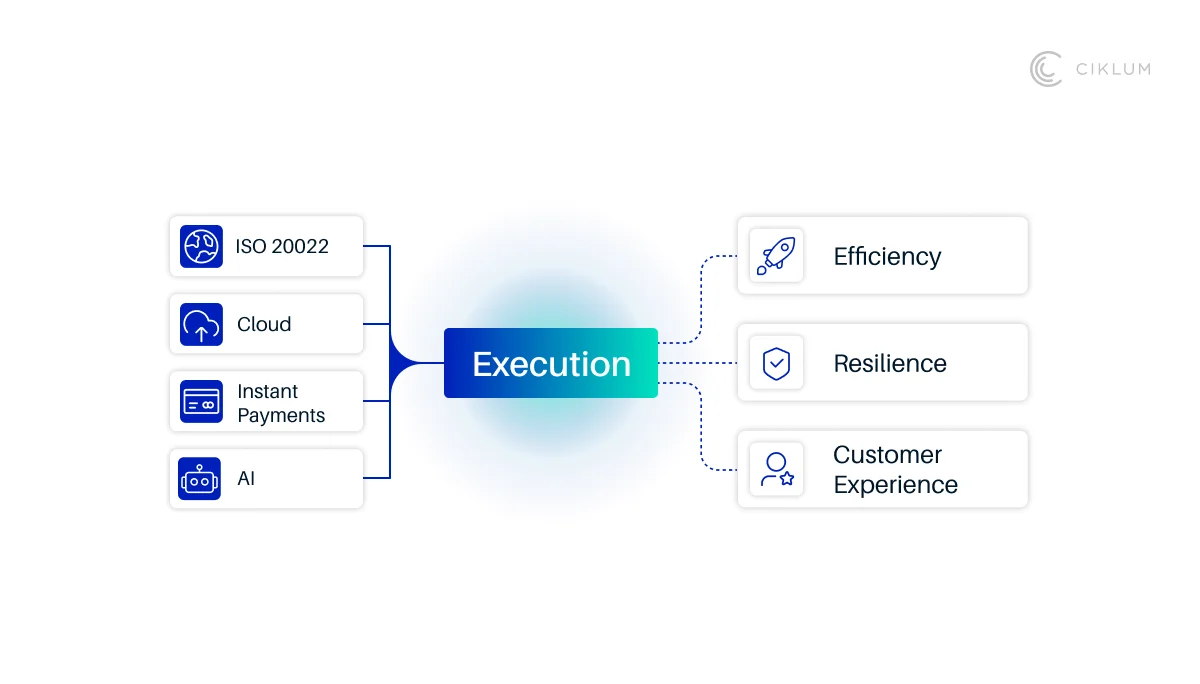
Why Transformation Programmes Lose Momentum
Digital transformation rarely fails because institutions lack an ambitious target architecture or an investment roadmap.
More often, the challenge emerges as that strategy meets the reality of day-to-day operations.
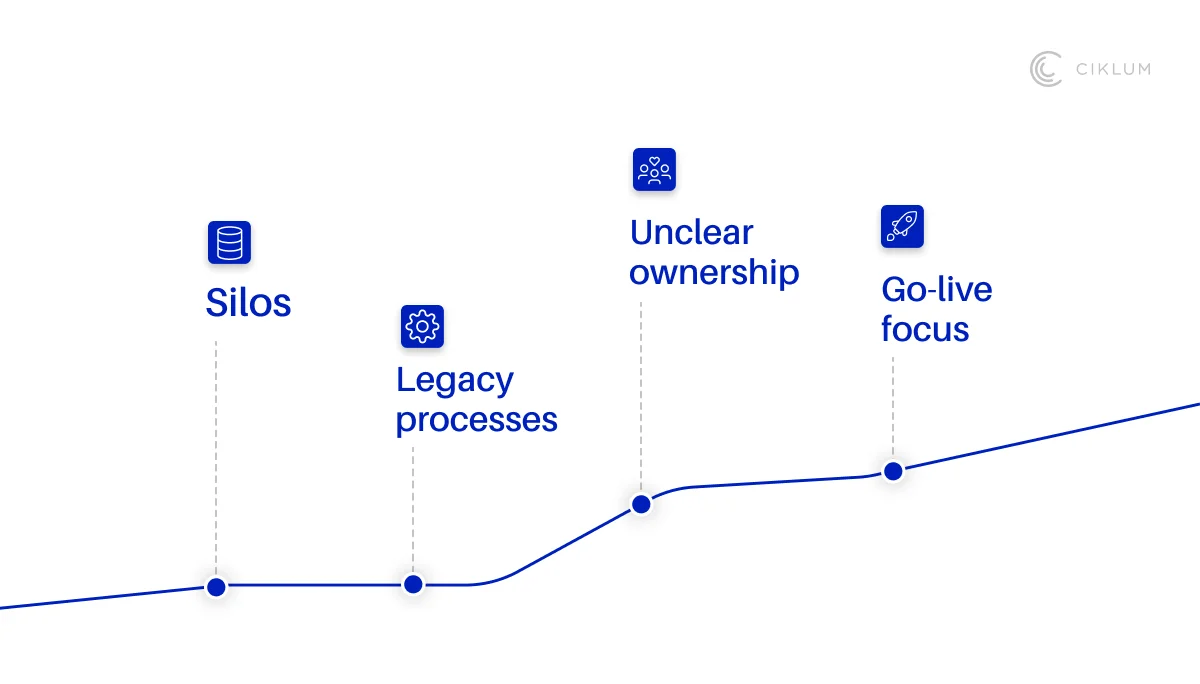
Four recurring issues can prevent programmes from delivering their intended business value.
-
Transformation Is Organised Around Systems, Not Outcomes
Banks may run separate programmes for cloud migration, ISO 20022, fraud modernisation, payment processing and customer experience.
Each can deliver its technical milestones while the wider operation remains fragmented.
A faster payment engine creates limited value if reconciliation still requires manual intervention or customers cannot track and resolve failed transactions.
-
Business And Technology Priorities Drift Apart
Technology teams focus on platforms, integration and release schedules. Operations teams focus on continuity, workload and service levels. Risk teams focus on control, while commercial leaders expect faster growth and lower costs.
All are legitimate priorities, but without shared ownership, transformation can become a collection of projects rather than one coordinated business change.
-
Legacy Processes Survive Modernisation
Replacing technology does not automatically eliminate inefficient processes.
Institutions can migrate applications to the cloud while retaining manual approvals, duplicated data entry, disconnected reporting and complex exception handling.
The infrastructure improves, but the operating model changes very little.
-
Go-Live Becomes The Definition Of Success
A programme can meet its implementation deadline yet fail to deliver sustained efficiency, better customer experiences or measurable cost improvements.
If operational teams are not prepared to adopt and continuously improve the new capability, the organisation may declare transformation complete before the business benefits have materialised.
These challenges share a common cause: transformation is managed as technology delivery rather than sustained operational change.
The Execution Gap Has Real Commercial Consequences
In payments, delayed transformation is not simply an IT problem.
It can affect operating costs, revenue opportunities, customer satisfaction, risk exposure and the institution's ability to compete.
A fragmented payment architecture can make it harder to introduce new payment methods or onboard partners. Manual investigations increase operating expenses. Disconnected data slows reconciliation and decision-making. Inconsistent processes make it more difficult to scale across products and markets.
The effect is cumulative.
Institutions continue investing in new capabilities while carrying the operational cost of systems and processes that have not been fully modernised.
The BIS's December 2025 assessment of cross-border payments reinforces the challenge. It found that although international policy work had established a foundation for progress, improvements experienced by end users remained modest and timely, consistent implementation was essential.
For business leaders, this raises an important question:
Are our transformation programmes creating measurable operational improvements, or simply adding another layer of technology to an already complex environment?
The answer should determine how institutions prioritise their next investments.
What Execution-Led Transformation Should Look Like
Closing the execution gap requires a change in how payment institutions plan, fund and manage transformation.
The starting point should be the business outcome, not the technology.
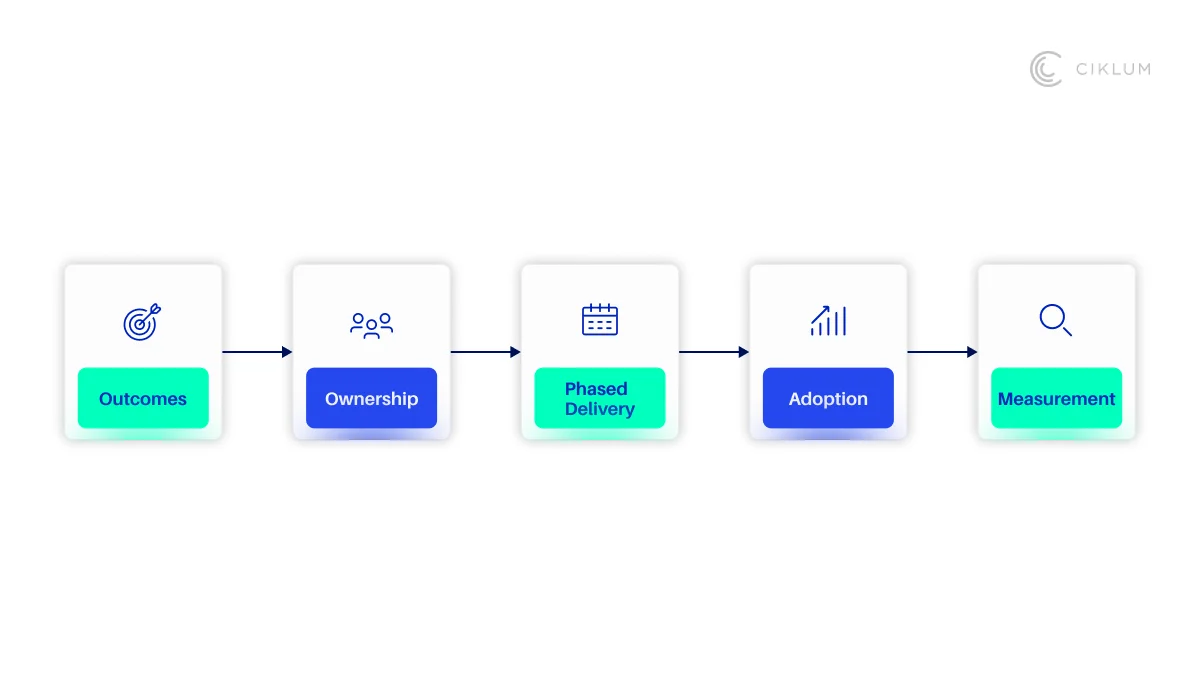
For payment leaders, that means five practical priorities.
- Define measurable outcomes early: Establish what success means before implementation begins, whether that is lower cost per transaction, fewer payment exceptions, faster reconciliation or improved payment success rates.
- Create shared business ownership: Align technology, payments operations, risk, compliance and commercial teams around the same objectives, with clear accountability for delivery and adoption.
- Modernise in manageable stages: Prioritise improvements that deliver operational value without unnecessarily disrupting critical payment services. Test integration, resilience and business processes before scaling.
- Build operational readiness into delivery: Include training, exception management, monitoring, governance and service ownership as part of the programme, rather than activities left until after launch.
- Measure value beyond go-live: Track whether the new capability continues improving performance once it becomes part of normal operations.
This approach also changes the way executives measure progress.
Instead of focusing primarily on migration percentages, implementation dates or platforms deployed, boards should see evidence of improved business performance.
That could mean fewer manual interventions, better straight-through processing, reduced operating costs, faster partner onboarding, lower failure rates and more reliable customer experiences.
The goal is not to make transformation programmes smaller.
It is to make their outcomes more visible, accountable and sustainable.
From Modernisation Plans To Measurable Results
The difference between technical delivery and business transformation becomes clearer when looking at actual operational results.
A useful example is Ciklum's work with Inspira, a US-based financial services organisation.
The company faced complex business logic, unclear process requirements and integration challenges that slowed transaction processing and increased errors.
Rather than treating these as isolated technology issues, Ciklum worked on connecting internal processing with banking partner systems, automating transaction flows and improving data reliability.
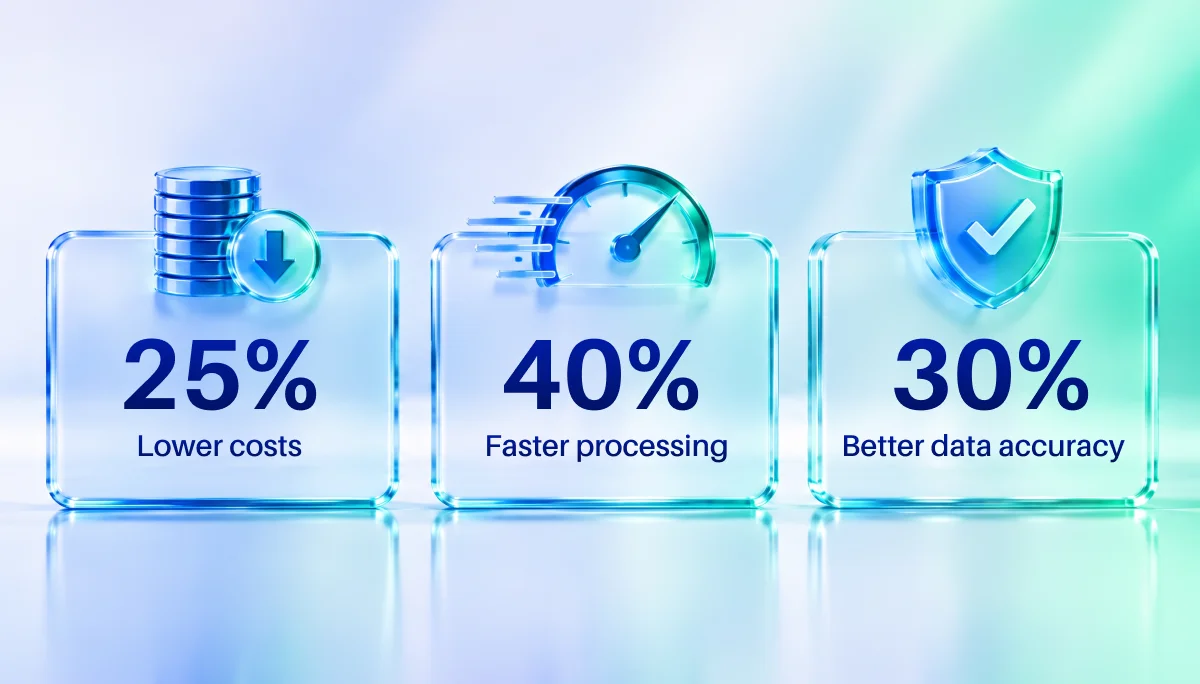
According to the published case study, the engagement delivered:
- 25% lower operational costs through streamlined automation.
- 40% faster transaction processing through improved workflows.
- 30% improved data accuracy, supporting more reliable operations.
These outcomes illustrate what execution-led transformation should achieve.
The technology mattered, but the business value came from reducing friction, connecting processes and improving operational performance.
A successful transformation is not defined by the system that was implemented. It is defined by what the organisation can do better because of it.
How Ciklum Helps Close The Execution Gap
For Ciklum, the opportunity is to act as a transformation and delivery partner that connects strategic ambition with operational execution.
Payment institutions need more than a technical implementation team. They need delivery capabilities that understand how modern platforms, legacy systems, integrations, operational workflows and regulatory expectations fit together.
Ciklum's Banking and Financial Services expertise spans payment architecture modernisation, payment orchestration, cloud transformation, intelligent automation, product engineering and integration across complex financial ecosystems.
That creates an opportunity to support clients throughout the transformation journey, from defining the right priorities and modernising critical platforms to integrating systems, improving delivery processes and measuring outcomes.
The focus should remain on the issues that matter to payment executives:
- Operational efficiency: reducing manual processing, exceptions and unnecessary costs.
- Faster delivery: shortening the time required to introduce payment capabilities and respond to changing requirements.
- Business resilience: improving reliability while modernising critical systems.
- Scalable growth: creating architectures and processes that support additional partners, payment methods and markets.
- Measurable value: connecting technology investment to commercial and operational performance.
Ciklum's role is not simply to help institutions implement their chosen technologies.
It is to help them translate transformation priorities into systems and operations that work better, deliver measurable improvements and remain effective as business needs evolve.
That is the distinction between a technology provider and a transformation partner.
The Next Competitive Advantage Is Execution
Payments innovation will not slow down.
ISO 20022 adoption will continue to evolve. Instant payments will expand. AI will influence more operational decisions. Open Finance will create new opportunities for connectivity, data sharing and customer experiences.
But the next phase of competition will not be determined by who has the most ambitious transformation roadmap.
It will be determined by who can execute against it.
The institutions that lead will be those capable of modernising without disrupting critical services, aligning business and technology teams, embedding new capabilities into everyday operations and demonstrating measurable returns on their investments.
For CEOs, COOs, Heads of Payments and transformation leaders, the priority is no longer simply deciding what the future should look like.
It is building the organisational capability to deliver that future, measure its value and sustain the improvement.
Strategy defines the destination. Execution determines whether the organisation gets there.
And closing that gap will be central to the next phase of payments transformation.

By Mark Westbrook

Global Head of Architecture
18+ Exp
Mark brings 18+ years of payments expertise, spanning POS, Open Banking, and Core Payment Rails. As Global Solutioning Director, he crafts innovative strategies that drive operational excellence across payments and banking.
Blogs
Discover Similar Insights

Retail Tech and Profit Margins: What’s Draining Revenue and How to Turn It Around
Learn More
Why Your Product Releases Keep Slipping (and How to Fix It for Good)
Learn More
Scalability Starts Here: Architecture Decisions That Make or Break Your Product
Learn More
The Impact of Unified Commerce on Retail Growth and Efficiency
Learn More